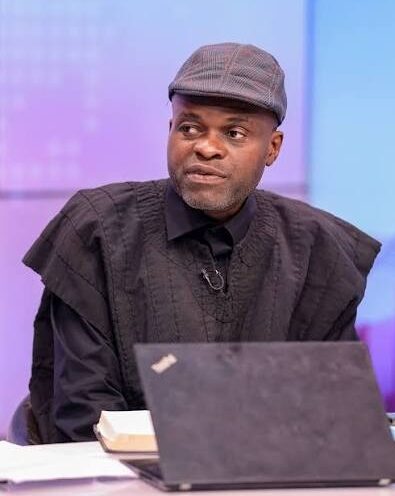
Why Was Mahama Ayariga Removed? Martin Kpebu Raises a Surprising LGBTQ+ Bill Theory

Could a dispute over Ghana’s controversial anti-LGBTQ+ Bill have played a role in Mahama Ayariga’s removal as Majority Leader? Legal practitioner Martin Kpebu believes it is a possibility—and his explanation has opened a fresh political debate.
Speaking on TV3 on August 8, 2026, Kpebu suggested that Ayariga’s position on the bill may have put him at odds with Parliament’s Speaker, Alban Bagbin, and created a difficult situation for the Mahama administration.
Kpebu Links Ayariga’s Removal to the Bill
Kpebu focused on the disagreement between Ayariga and Speaker Bagbin over whether the controversial legislation had already been properly passed by Parliament.
According to Kpebu, Ayariga maintained that the bill had been validly passed and only required presidential assent.
Bagbin, however, has taken a different position and indicated that the legislation could be reconsidered.
That difference, Kpebu argued, could have made Ayariga’s continued position as Majority Leader politically difficult.
“The one that has intrigued me is Agalga’s promotion to that position,” Kpebu said.
He speculated that the Speaker’s suggested revisiting of the bill would have been made possible by Ayariga’s dismissal.
Why James Agalga’s Appointment Matters
Ayariga’s removal came after his nomination as Minister for Local Government, Chieftaincy and Religious Affairs.
James Agalga has since taken over as Majority Leader.
For Kpebu, the choice of Agalga is particularly significant.
He believes the change could help clear the way for Parliament to revisit the LGBTQ+ Bill, especially given the sharp disagreement over its status.
Kpebu noted that the legislation has also attracted intense international attention, adding another layer of pressure to an already sensitive political issue.
In his view, the situation could be summed up this way:
Ayariga maintained that Parliament had already passed the bill.
Speaker Bagbin has disputed that position.
The Speaker has proposed reconsideration of the legislation.
Ayariga has now moved from Majority Leader to a ministerial role.
James Agalga has taken over as Majority Leader.
Kpebu believes those developments may be connected.
“The NDC Will Pay Dearly” If It Remains Unresolved
Kpebu also warned the NDC not to assume that the controversy will simply disappear.
Although the bill has remained largely out of the political spotlight for now, he believes the opposition could bring it back at a strategically important time.
His warning was blunt: if the issue is not resolved before the next general elections, the NDC could face political consequences.
He argued that opposition parties could wait until the election season before using the unresolved bill as a major campaign issue.
“The opposition are watching. They’ll just wait, and they’ll raise it again when the elections come around,” he stated.
According to Kpebu, settling the dispute now could prevent it from evolving into a far more potent political instrument later on.
A Bill Passed Between Parliament and the President
At the heart of the dispute is a basic but politically explosive question: **Has the bill already been passed, or can Parliament reconsider it?**
Ayariga’s position, as described by Kpebu, is that the bill has already gone through Parliament and is awaiting presidential assent.
Bagbin’s position is different.
That disagreement has created uncertainty over what happens next.
Kpebu therefore sees Ayariga’s departure from the Majority Leader position as potentially significant.
He suggested that the leadership change could make it easier for Parliament to consider the Speaker’s proposal to revisit the legislation.
But Is That Really Why Ayariga Was Removed?
That remains the big unanswered question.
Kpebu presented the LGBTQ+ Bill as a possible explanation for Ayariga’s removal, not as an established fact.
Ayariga’s move was formally linked to his nomination as Minister for Local Government, Chieftaincy and Religious Affairs.
Whether the controversy surrounding the bill played any behind-the-scenes role is therefore a matter of political interpretation.
Still, Kpebu’s comments have revived an issue that has refused to disappear.
With the next election cycle approaching, the question may no longer be whether the LGBTQ+ Bill will return to Ghana’s political agenda—but when, and in what form, it will return.