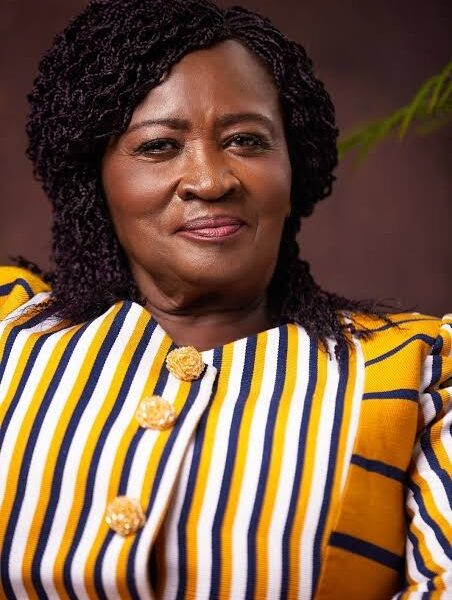

Vice President Professor Jane Naana Opoku-Agyemang has called on Ghanaian universities to strengthen their collaboration with businesses. She emphasized that closer partnerships will help graduates adapt to the evolving job market and develop solutions to real-world challenges.
Speaking at KAAF University’s graduation ceremony on Friday, August 7, 2026, the Vice President said tertiary institutions must look beyond traditional classroom teaching.
She said universities have a key role to play in preparing young people for Ghana’s development needs.
Universities Must Connect Learning to Jobs
Prof. Opoku-Agyemang called on universities to build stronger links with businesses and other industries.
She said this would help ensure that students gain skills that employers and the wider economy actually need.
She highlighted several areas where universities can make a difference, including:
Engineering and sustainable infrastructure
Digital innovation and technology
Healthcare
Governance and public policy
Law and justice
Business and entrepreneurship
According to the Vice President, institutions such as KAAF University should help produce professionals who can turn knowledge into practical solutions.
She also urged the university to increase its funding for industry collaborations and research.
She stated that the objective is straightforward: what pupils learn should directly correspond to the needs of Ghana’s economy.
“Resetting Ghana” Needs More Than Government
Prof. Opoku-Agyemang said Ghana has reached what she described as a “defining moment” in its development.
But she stressed that government cannot achieve its development vision on its own.
She said the Resetting Ghana agenda requires a joint effort from universities, businesses and citizens.
Her message was that universities must produce people who are not only academically qualified but also ready to lead, innovate and serve responsibly.
That means graduates must be prepared to:
Create jobs instead of only searching for them.
Develop solutions to problems in their communities.
Lead with integrity.
Reject corruption and mediocrity.
Use their knowledge to improve people’s lives.
Women Take the Lead at KAAF Graduation
The graduation ceremony also produced a notable gender milestone.
Women accounted for 58% of the graduating class, while men made up 42%.
Prof. Opoku-Agyemang welcomed the development, describing it as a sign of progress and greater inclusion in higher education.
She also acknowledged the contribution of men in supporting and working alongside women in education and professional life.
The figures highlight the changing face of Ghana’s higher education system, where more women are taking up opportunities to gain advanced skills and professional qualifications.
The People Behind the Graduates
The Vice President also used the occasion to recognise people who often receive little public attention but play an important role in university life.
She urged the graduates to applaud junior staff, including cleaners, messengers and drivers.
These workers, she noted, may rarely appear in the spotlight, but their contribution is essential to keeping institutions running.
The message was broader than a simple thank-you.
Prof. Opoku-Agyemang urged the graduates to remember that success is rarely achieved alone and that every role can contribute to a larger goal.
KAAF University Celebrates a Historic Graduation
For KAAF University, the ceremony marked an important chapter in its development.
Vice Chancellor Dr Francis Acheampong described the congregation as historic because it was the university’s first graduation under its own academic authority after years of operating under mentorship.
He described the journey as a move from dependence to greater confidence and performance.
Dr Acheampong also reminded the graduates that their degrees should mean more than academic achievement.
A university qualification, he said, should come with a responsibility to lead, serve and pursue excellence.
The Challenge Starts After Graduation
The message from the ceremony was clear: graduation is not the end of the journey.
For the new graduates, the real test begins when they take their knowledge into workplaces, businesses and communities.
Professionals with more than just a diploma are needed in Ghana. It requires individuals who can solve issues, generate opportunities, and behave honorably.
And if the Vice President’s message is anything to go by, universities will be expected to play a much bigger role in making that happen.