Mahama Government Accused of Double Standards Over Free Speech: What Ofosu Boakye Says

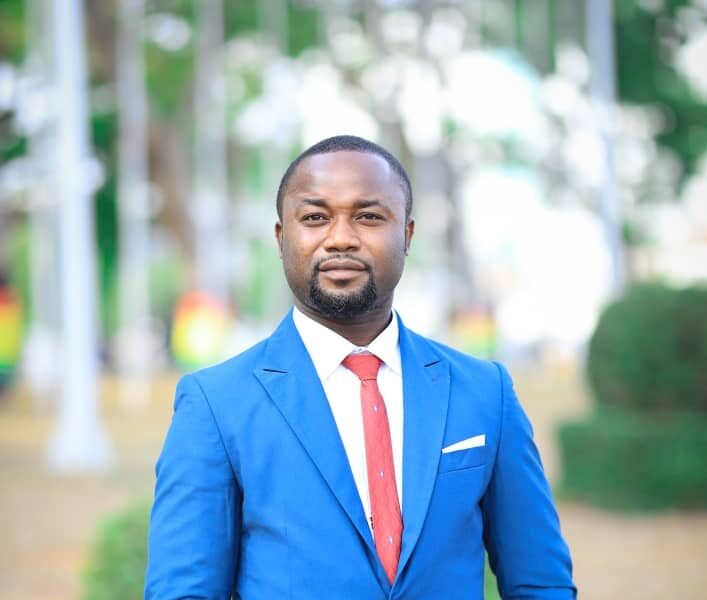
A former Suame Municipal Chief Executive has raised fresh questions about Ghana’s political culture, accusing the Mahama administration and the National Democratic Congress (NDC) of applying different standards to political speech depending on who is speaking.
Maxwell Ofosu Boakye, speaking on JoyNews’ “AM Show” with Samuel Kojo Brace, argued that the government and its supporters once benefited from aggressive political criticism but are now being accused of restricting similar voices after taking power.
His comments come amid growing tensions over free speech, political criticism and the use of state institutions.
Ofosu Boakye Questions the Government’s Approach
According to Ofosu Boakye, Ghana’s political environment has long allowed politicians and their supporters to use harsh language against their opponents.
His concern is that the rules may now be changing.
He argued that a government should not embrace strong criticism when it is directed at its political opponents and then seek to restrict similar criticism when it becomes the target.
His comments followed the New Patriotic Party’s (NPP) recent “Democracy Under Attack” protest, which focused on concerns about political freedoms, opposition activity and freedom of expression.
For Ofosu Boakye, the issue goes beyond one political party.
He believes the government must create enough space for citizens to criticise those in power without fear of being targeted by state institutions.
The Kevin Taylor Question
Ofosu Boakye used US-based Ghanaian political commentator Kevin Ekow Baidoo Taylor to make his point.
Taylor has been a vocal supporter of the NDC and a fierce critic of the NPP. Ofosu Boakye questioned why, in his view, Taylor has received a different level of treatment from other political opponents who have faced arrest or prosecution.
“Kevin Taylor, is he not your hero?”
He also questioned whether Taylor was not previously praised by NDC supporters for his outspoken political commentary.
Ofosu Boakye pointed to Taylor’s return to Ghana in 2025 as another example of what he sees as an inconsistent approach.
He argued that Taylor had made controversial comments about several prominent figures but was still able to return to Ghana and continue his activities.
Why the Argument Is Bigger Than One Person
The dispute over Taylor is part of a much wider political argument.
In May 2026, the NPP called on President John Dramani Mahama and the NDC to distance themselves from comments attributed to Taylor concerning former President John Agyekum Kufuor.
The controversy has added to an already heated debate about the limits of political expression in ghana.
The key questions include:
Should political criticism be protected even when it is harsh or offensive?
Should politicians face the same standards as ordinary citizens?
When does political speech cross the line into conduct that requires legal action?
Can state institutions enforce the law without creating a perception of political persecution?
These questions have become increasingly important as political tensions rise.
NPP Says Democracy Is Under Pressure
The NPP has repeatedly raised concerns about what it describes as a growing “culture of silence.”
Former Vice President and NPP presidential candidate Dr Mahamudu Bawumia also warned in April that Ghana’s democracy was facing danger, arguing that freedom of expression was being compromised for political reasons.
The party’s recent protest was built around similar concerns.
For the NPP, the issue is not unlimited freedom to say anything without consequences. Rather, the party says citizens should be able to question and criticise government officials without being intimidated.
Ofosu Boakye echoed that position, urging the Mahama administration to exercise caution when state agencies become involved in disputes involving political opponents or government critics.
Government Supporters Offer a Different View
Supporters of the government, however, reject the suggestion that law enforcement against political figures automatically amounts to an attack on democracy.
Their argument is straightforward: enforcing the law is not the same as suppressing political opposition.
That creates the central question at the heart of the current debate.
Where should Ghana draw the line between legitimate law enforcement and political intimidation?
Ofosu Boakye believes the Mahama administration must answer that question carefully.
His criticism also raises a difficult challenge for Ghana’s political class: Can politicians defend free speech consistently when the words are directed at them, rather than their opponents?
As the debate continues, that may be the real test of Ghana’s democratic culture.